Car audio terminology can seem overwhelming, but understanding it is crucial for making informed decisions about your car’s sound system. Whether you’re an audiophile or just want better sound in your vehicle, familiarizing yourself with car audio terminology will help you choose the right components and achieve the best listening experience.
This article will guide you through the key concepts and terms in car audio terminology, explain their importance, and introduce you to some product examples that illustrate these concepts. By the end, you’ll have the knowledge to make sound decisions (pun intended) when upgrading or purchasing a car audio system.
Understanding the Basics of Car Audio Terminology
At the heart of car audio terminology are the fundamental components that make up any sound system. These include the head unit, speakers, amplifiers, and subwoofers. Understanding these components is the first step toward making informed decisions about your car audio system.
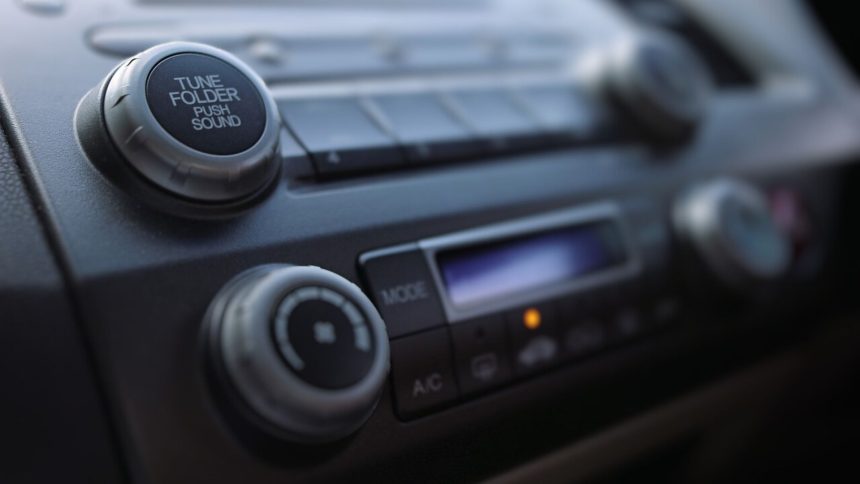
The head unit, also known as the stereo or receiver, is the control center of your car audio system. It allows you to manage everything from volume to sound settings and source selection. In car audio terminology, the head unit’s features and specifications play a significant role in determining the overall sound quality of your system.
Speakers are another crucial element in car audio terminology. They are responsible for converting electrical signals into sound. When discussing car audio terminology, you’ll often come across terms like “coaxial” and “component” speakers, which refer to the design and functionality of these speakers. Coaxial speakers, such as the Pioneer TS-A1670F, combine multiple drivers into a single unit, while component speakers, like the JL Audio C2-650, separate the drivers for improved sound quality.
Amplifiers are vital in car audio terminology, as they provide the necessary power to your speakers. Without an amplifier, your speakers may not perform at their best. A well-regarded example is the Rockford Fosgate R500X1D, known for its reliable power output and compact design.
Subwoofers are specialized speakers that handle low-frequency sounds or bass. In car audio terminology, subwoofers are essential for those who want deep, powerful bass in their music. The Kicker 44CWCS124 is a popular subwoofer option for enhancing low-end frequencies in a car audio system.
The Role of Decibels in Car Audio Terminology
Decibels (dB) are a fundamental concept in car audio terminology. Decibels measure the intensity of sound, and understanding this measurement is key to achieving the desired volume and clarity in your car audio system.
In car audio terminology, decibels are used to describe how loud a sound is. For example, a conversation typically occurs around 60 dB, while a live rock concert might reach 120 dB. When it comes to car audio systems, understanding decibel levels can help you determine how much power you need from your speakers and amplifiers.
The relationship between power and decibels is logarithmic, meaning that a small increase in decibels requires a significant increase in power. For instance, increasing the volume by 3 dB requires doubling the power output. This aspect of car audio terminology is crucial when choosing amplifiers and speakers, as you’ll want to ensure that your system can produce the desired sound levels without distortion.
Frequency Response and Crossover: Key Car Audio Terminology
Frequency response is another critical aspect of car audio terminology. It refers to the range of frequencies a speaker can reproduce, typically measured in hertz (Hz). Understanding this term is vital for selecting the right speakers and subwoofers for your car audio system.
For example, the Alpine R-Series R-S65C speakers are known for their wide frequency response, allowing them to reproduce both low and high frequencies with clarity. In car audio terminology, speakers with a broader frequency response can provide a more balanced and full sound.
Crossover is another important term in car audio terminology. A crossover is a device that divides the audio signal into different frequency ranges, directing each range to the appropriate speaker (e.g., lows to subwoofers, mids to midrange speakers, and highs to tweeters). A well-known crossover system is the AudioControl LC2i PRO, which ensures that each speaker in your system receives the correct frequencies for optimal performance.
Understanding these aspects of car audio terminology will help you choose the right components to achieve a well-balanced sound in your vehicle.
Impedance and Power Handling: Essential Car Audio Terminology
Impedance, measured in ohms, is a key concept in car audio terminology. It refers to the resistance a speaker offers to the electrical current from the amplifier. Most car speakers have an impedance of 4 ohms, but you may also encounter 2-ohm or 8-ohm speakers. Understanding impedance is crucial for ensuring compatibility between your speakers and amplifier.
For example, the Infinity Kappa 62IX speakers have an impedance of 2.5 ohms, allowing them to draw more power from the amplifier, which can result in louder sound. In car audio terminology, matching the impedance of your speakers to your amplifier is essential for maximizing performance and avoiding damage to your components.
Power handling is another important term in car audio terminology. It refers to the amount of power a speaker can handle without being damaged, typically expressed in watts. There are two key power handling ratings in car audio terminology: RMS (Root Mean Square) and peak power. RMS refers to the continuous power a speaker can handle, while peak power represents the maximum power it can handle in short bursts.
For instance, the JL Audio C3-650 component speakers have an RMS power handling of 75 watts, making them well-suited for most car audio systems. Understanding these ratings in car audio terminology will help you choose speakers and amplifiers that are well-matched and capable of delivering the sound performance you desire.
Sound Quality vs. Sound Pressure: Deciphering Car Audio Terminology
In car audio terminology, there’s often a distinction between sound quality and sound pressure. Sound quality refers to the accuracy and clarity of the audio produced by your system, while sound pressure refers to the loudness or impact of the sound, often measured in decibels.
Some car audio enthusiasts prioritize sound quality, seeking systems that produce clear, detailed sound at all volumes. Products like the Focal K2 Power 165 KRX2 speakers are renowned for their sound quality, offering crisp highs, rich mids, and controlled bass. Understanding car audio terminology related to sound quality will guide you in choosing components that deliver the best possible audio experience.
Others prioritize sound pressure, aiming for systems that can produce loud, powerful sound, especially in the low-frequency range. Subwoofers like the Sundown Audio SA-12 are popular among those who want to feel the bass as much as they hear it. Car audio terminology related to sound pressure helps in selecting components that can achieve high SPL (Sound Pressure Level) without distortion.
Read More: The New 2025 Audi RS Q8 Performance Review
Advanced Car Audio Terminology: THD, SNR, and Dynamic Range
As you gain a deeper understanding of car audio terminology, you’ll encounter more advanced terms like Total Harmonic Distortion (THD), Signal-to-Noise Ratio (SNR), and Dynamic Range.
Total Harmonic Distortion (THD) is a measure of distortion in the audio signal. In car audio terminology, a lower THD value is better, as it indicates that the audio signal remains pure and free from distortion. For example, the Kenwood Excelon XR600-6DSP amplifier boasts a low THD, ensuring clean and clear sound.
Signal-to-Noise Ratio (SNR) is another critical concept in car audio terminology. SNR measures the level of the desired audio signal compared to the level of background noise. A higher SNR value indicates a clearer sound with less interference from noise. The Alpine PDX-V9 amplifier, for example, has a high SNR, making it a popular choice for audiophiles who prioritize sound clarity.
Dynamic Range, in car audio terminology, refers to the difference between the quietest and loudest sounds a system can reproduce. A system with a wide dynamic range can handle subtle details and powerful peaks without distortion. Products like the Hertz Mille Legend MLK 165.3 speakers are known for their excellent dynamic range, delivering both delicate and powerful sounds with precision.
Understanding these advanced aspects of car audio terminology will help you fine-tune your system for the best possible performance.
Choosing the Right Car Audio Products
Armed with a solid understanding of car audio terminology, you’re now ready to make informed decisions when selecting car audio products. Whether upgrading an existing system or building a new one, knowing the key terms and concepts will help you choose components that meet your needs.
For example, if you’re looking for a head unit with advanced features, consider the Sony XAV-AX5000, which offers a high-resolution display, multiple connectivity options, and excellent sound quality. For speakers that balance sound quality and power handling, the JBL GTO609C component speakers are a great option.
If your focus is on achieving deep bass, the Rockford Fosgate P3D4-12 subwoofer delivers powerful low-frequency performance, making it a favorite among bass enthusiasts. And for those seeking an amplifier that combines power with precision, the Alpine X-A70F is a top contender, offering clean sound and robust power output.
Conclusion
Understanding car audio terminology is crucial for making informed decisions when selecting and upgrading your car audio system. By familiarizing yourself with the essential terms and concepts, you can confidently choose products that meet your sound quality and performance needs. Whether you’re focused on achieving crystal-clear audio, powerful bass, or a balanced sound, mastering car audio terminology will help you build the perfect system and enjoy your music to the fullest.