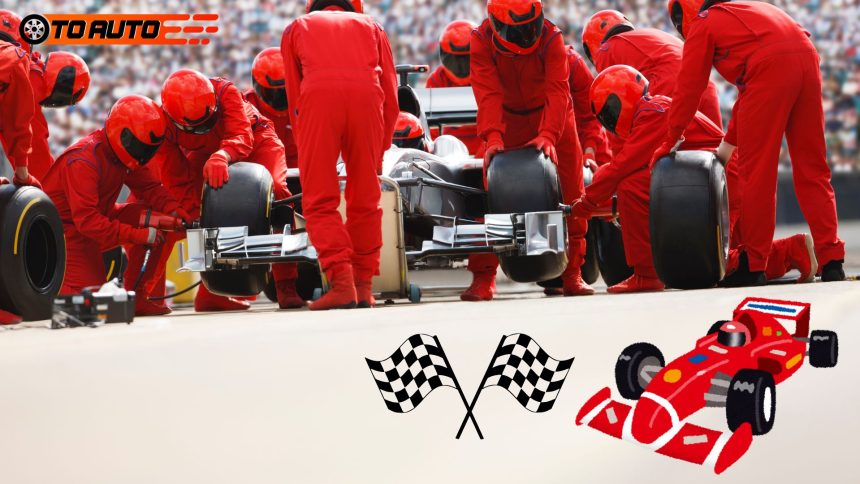
In Formula 1, speed isn’t the only factor that determines victory. Alongside the precision of the car and the skill of the driver, there is a silent battle happening in the background — the battle of strategy. Nowhere is this more apparent than in the art of the pit stop. What might seem like a brief pause in the action is, in reality, a complex and critical moment that can make or break a race. The pit stop is where split-second decisions, teamwork, and mind games come into play, all with the aim of gaining an edge over the competition.
In this article, we dive into the fascinating world of Formula 1 pit stops, exploring their evolution, the role they play in race strategy, and how teams use them as a tool for tactical advantage.
The Evolution of Pit Stops in Formula 1
In the early days of Formula 1, pit stops were simple refueling and maintenance breaks. Teams would spend several minutes changing tires, adding fuel, and making adjustments to the car. Speed wasn’t the priority back then; the focus was on ensuring the car could complete the race. Over time, however, the emphasis on performance and efficiency pushed teams to find ways to reduce time lost in the pits.
The evolution of the pit stop reached a turning point in the 1980s and 1990s. Advances in technology and a shift in racing strategy meant that stopping for tires or fuel could actually help a team gain track position, rather than just being a necessary evil. By the 2000s, refueling during races was banned, and the focus shifted entirely to tire changes. Today, the fastest pit stops take as little as two seconds, with crews of 20 people or more working in perfect harmony to change all four tires and send the car back out on track.
A Formula 1 pit stop may last only a couple of seconds, but the strategy behind when and how to execute it can determine the outcome of a race. For modern teams, the pit stop is a fine-tuned operation that requires both careful planning and rapid execution.
Read More: Why Downforce is the Key to Formula 1’s Unmatched Speed and Grip
The Role of Pit Stops in Race Strategy
At its core, the purpose of a pit stop is to replace worn tires with fresh ones, enabling the car to maintain or improve its pace. However, when and how to make that stop is far from straightforward. Teams have to balance several factors, including tire degradation, fuel levels, track conditions, and the positions of rival cars. Choosing the wrong moment to come in for a pit stop can cost a driver precious time or, worse, track position. On the flip side, a perfectly timed stop can be the key to victory.
The mind games begin even before the race starts. Teams carefully study tire wear rates and simulate race strategies to predict when their competitors will pit. During the race, they constantly analyze data, reacting to changes in the weather, safety car periods, and other variables that could influence their pit stop strategy.
Undercut vs. Overcut: Tactical Maneuvers
One of the most intriguing strategic tools in a Formula 1 pit stop is the concept of the undercut and overcut. These are tactics that teams use to leapfrog their competitors by timing their pit stops to perfection.
The undercut is a strategy where a driver pits earlier than their rival, gaining an advantage by using fresh tires to set faster lap times. The theory is that while the rival stays on worn tires for an extra lap or two, the driver on fresh rubber will be able to close the gap or even overtake once the other car makes its stop. The undercut can be devastatingly effective, especially on circuits where tire wear is high and pace drops off rapidly as the tires degrade.
Conversely, the overcut involves staying out longer on worn tires in the hope of maintaining track position while the rival pits. The idea here is that, even with worn tires, a driver can maintain a fast enough pace to stay ahead once the competitor comes in for their pit stop. This strategy relies heavily on the driver’s ability to extract every ounce of performance from the worn tires, and it’s often used when the track is clear, allowing the driver to push without traffic holding them up.
The Importance of Tire Selection
Another critical aspect of pit stop strategy is tire selection. Formula 1 teams have access to different types of tires, each offering a trade-off between speed and durability. The softer the tire, the faster it will be over a short distance, but it will wear out more quickly. Harder tires, meanwhile, last longer but don’t provide the same level of grip and speed.
Choosing the right tire compound for a race is a gamble that teams have to get right. During the race, teams must constantly assess whether it’s worth staying out on harder tires for longer or switching to softer, faster tires at the risk of having to make more pit stops. Weather also plays a huge role in this decision-making process, with wet or intermediate tires required when rain hits the track.
These decisions happen in real-time and require teams to be constantly calculating the trade-offs. Tire choice can be influenced by factors like track surface, ambient temperature, and even the likelihood of a safety car disrupting the race.
The Human Element: The Pit Crew’s Role
While much of the focus during a Formula 1 race is on the drivers, the role of the pit stop crew cannot be overstated. These unsung heroes of the race spend hours training to ensure they can execute the perfect pit stop under immense pressure. In the blink of an eye, a well-coordinated crew will lift the car, remove the old tires, fit the new ones, and send the driver back onto the track in a matter of seconds.
Teams practice pit stops tirelessly, working on everything from choreography to minimizing mistakes. Even the smallest delay — a stuck tire or a slow release — can cost a driver vital seconds and potentially the race. Over the years, the speed of pit stops has become so refined that a sub-two-second stop is now considered a benchmark of excellence.
But speed isn’t the only factor. Safety is paramount in Formula 1, and pit stop procedures are strictly regulated to ensure that no one gets hurt. Missteps can have serious consequences, both in terms of race results and driver and crew safety.
The Psychological Impact of Pit Stop Strategies
Aside from the physical execution of pit stops, there’s a mental component at play. Teams use pit stop strategy to apply psychological pressure on their rivals. For instance, by calling a driver into the pits earlier than expected, a team can force their competitor into making a rushed decision, potentially disrupting their strategy.
Drivers, too, feel the pressure of the pit stop mind games. Being told to pit earlier or later than anticipated can affect their rhythm, and they must trust their team to make the right call. A driver’s ability to stay calm under pressure and execute the team’s strategy is just as important as the crew’s ability to perform a flawless stop.
Conclusion: The High-Stakes World of Formula 1 Pit Stops
In the world of Formula 1, where races are often decided by tenths of a second, the humble pit stop plays a crucial role in determining the outcome. What may seem like a brief pause in the action is, in fact, a battlefield where teams engage in strategic warfare, balancing risk and reward with every decision.
The mind games that take place during pit stops—whether it’s pulling off a successful undercut, choosing the right tires, or executing the stop itself—add another layer of excitement to an already thrilling sport. For both teams and drivers, mastering the art of the pit stop can be the key to achieving victory, and it’s one of the many reasons why Formula 1 continues to captivate fans around the world.